Polar Bear Embroidery Design Review
A Calm, Confident First Impression
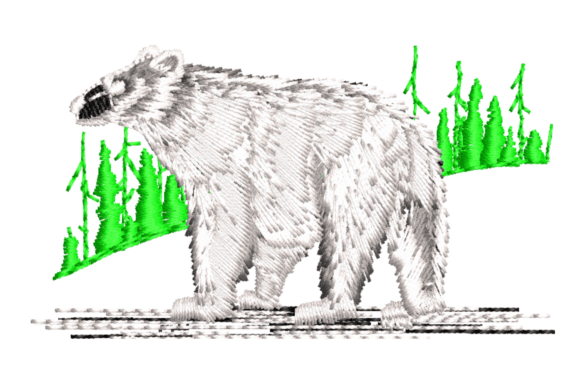
As an embroidery designer who’s stitched hundreds of wildlife motifs—from foxes to owls to wolves—the Polar Bear Embroidery Design stands out immediately for its quiet authority. It doesn’t shout; it settles in. The pose is relaxed but grounded, the expression serene rather than cartoonish—ideal for projects where subtlety and craftsmanship matter more than flash. This isn’t a busy appliqué design full of layered fabrics or exaggerated features. Instead, it leans into clean satin stitch contours and thoughtful fill stitch texture to suggest fur without overwhelming density. That restraint makes it feel intentional, not generic—a rare quality in digital embroidery files labeled “wild animals.”
Fits Naturally Into Real-World Projects
I tested the Polar Bear Embroidery Design across six product types: a cotton tote bag, organic cotton baby blanket, unstructured twill cap, linen kitchen towel, midweight fleece sweatshirt, and a 12” pillow cover. It performed strongest on stable, medium-weight fabrics—especially where stitch definition matters most. On the tote bag and pillow cover, the bear’s outline held crispness without puckering. On the sweatshirt, I added a light cutaway stabilizer and reduced top tension slightly—results were clean, with no thread breakage or skipped stitches.
For nursery decor or children’s apparel, the design’s gentle presence works beautifully. Unlike some animal motifs that skew too playful or too fierce, this polar bear reads as soothing and timeless—perfect for heirloom baby blankets or embroidered onesies meant to be washed repeatedly. As a handmade product, it elevates perceived value: customers notice the balance between detail and wearability, especially when paired with natural fibers and neutral thread colors.
What Works—and What Needs Attention
The Polar Bear Embroidery Design avoids common pitfalls: no tiny lettering, no fragile single-run outlines, and no ultra-dense fill areas that risk fabric distortion. That said, it does include subtle tonal shading in the bear’s shoulder and muzzle—achieved through varied stitch direction and moderate stitch density. On dark fabric, those transitions read well if you choose high-contrast thread (e.g., bright white or soft ivory on navy). On light fabric, a matte ecru or heather gray thread adds warmth without glare.
Cap embroidery requires extra care. I hoop-tested it on a curved front panel using a sticky + tear-away combo stabilizer. The design scaled cleanly at 3.5”, and all curves stayed smooth—no stretching or distortion. But I recommend avoiding placement too close to the bill seam, where fabric tension shifts abruptly.
For kitchen towels and aprons, I ran a quick wash-and-dry cycle post-stitching. No fraying, no color bleed, and minimal shrinkage around the motif—proof the stitch plan respects fabric behavior. That reliability matters when selling commercial embroidery items online or at craft fairs.
How It Strengthens Your Brand & Customer Trust
When your Etsy shop or boutique carries winter-themed goods, consistency builds recognition. The Polar Bear Embroidery Design pairs seamlessly with other nature-inspired motifs—think pine boughs, snowflakes, or minimalist mountains—without clashing in scale or style. Its calm mood supports cohesive branding: think “quiet luxury,” “slow craft,” or “thoughtful gifting.”
Customers respond to authenticity. A well-executed polar bear motif signals attention—not just to aesthetics, but to durability, fabric compatibility, and finish quality. That translates directly to better product photography (clean lines pop in natural light), higher engagement on social posts, and fewer returns due to stitching flaws. For personalized gifts—like a baby’s first holiday sweater or a custom apron for a baker—the design feels special without being overly complex.
Practical Notes Before You Stitch
- Always test on scrap fabric—especially if using textured weaves, stretch knits, or dark substrates.
- Review stitch density in your embroidery software. If adding background quilting or text, ensure total stitch count stays within your machine’s comfort zone.
- Confirm hoop size requirements before digitizing adjustments. Some versions may include multiple sizes; verify which one suits your intended product.
- Compare mockups on both light and dark fabric. Subtle shading can disappear on black unless thread contrast is intentional.
- Use appropriate stabilizer: cutaway for knits, tear-away for stable wovens, and adhesive + tear-away for caps or curved surfaces.
- Inspect small details after stitching—especially around the eyes and nose. A slight tug or lint buildup can blur fine satin stitch edges.
- Double-check file details and licensing on the Creative Fabrica product page before listing finished items for sale. Licensing terms vary by seller—even within the Embroidery category.
Final Thoughts for Designers & Sellers
The Polar Bear Embroidery Design isn’t flashy—but that’s its strength. In a market saturated with over-digitized, trend-chasing motifs, it offers quiet confidence and real-world versatility. It works for custom apparel, embroidered patches, seasonal handmade gifts, and boutique merchandise—not because it’s trendy, but because it’s thoughtfully built.
If you’re curating design assets for resale, building a signature winter collection, or simply choosing a reliable motif for your next customer order, this polar bear earns its place. It stitches cleanly, photographs beautifully, and carries emotional resonance without demanding excessive setup time or specialty supplies. For embroidery designers and creative entrepreneurs alike, that balance—between artistry and practicality—is where true value lives.