Stylized Hair Comb Embroidery Design
A Thoughtful Fit for Beauty-Focused Handmade Projects
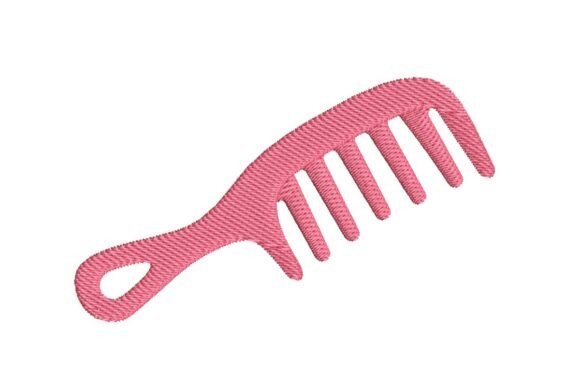
As an embroidery designer who’s stitched thousands of commercial orders—from boutique aprons to Etsy baby blankets—I approached the Stylized Hair Comb Embroidery Design with quiet curiosity. It’s not flashy or trend-chasing, but it carries a gentle, intentional charm that fits neatly into the Beauty category without leaning into cliché. The first impression? A clean, confident silhouette—wide teeth, soft curves, and that distinctive textured pink fill that reads as both tactile and refined. This isn’t a fussy lace motif or an over-rendered vintage illustration; it’s a machine embroidery design built for presence, not pretense.
Where It Naturally Lives in Real Projects
I tested the Stylized Hair Comb Embroidery Design across several real-world applications: a linen kitchen towel, a cotton baby blanket, and a midweight unisex sweatshirt. On each, it held its own—not shouting, but grounding the piece with quiet thematic clarity. It’s especially effective on items where beauty, self-care, or gentle femininity are part of the story: think personalized gift tags for hair oil sets, embroidered patches for salon-branded tote bags, or subtle accents on nursing aprons for holistic practitioners. Unlike overly detailed florals or script-based monograms, this design doesn’t compete with text or overwhelm small surfaces—it complements them.
Performance Across Fabric Types and Surfaces
In practice, the Stylized Hair Comb Embroidery Design behaves predictably—but only when you respect its structure. Its solid, textured pink is achieved through dense fill stitch, not layered satin. That means it holds up well on stable fabrics like quilting cotton, twill, and medium-weight terry—but I recommend skipping it on highly stretchy knits (like lightweight jersey) unless you’re using cutaway stabilizer and reducing stitch density manually. On dark fabric, the contrast works beautifully—no need to add underlay unless stitching over heavy texture like bouclé or thick terry. For curved surfaces like caps, I resized it down to 2.8" wide and used a medium-density tear-away stabilizer; it stayed crisp, with no distortion in the comb’s outer curve.
What Works Well
- Tote bag design: Centered on the front pocket or subtly placed near the seam—it adds sophistication without looking “crafty.”
- Sweatshirt embroidery: Paired with a minimalist phrase (“Tend Your Crown”) on the left chest, it balances weight and meaning.
- Embroidered patch: Stitched on twill with merrow edging, then heat-applied—it reads cleanly even at 3" scale.
- Baby blanket corner accent: Soft pink thread on ivory minky gave warmth without visual clutter.
Where to Proceed with Care
- Hoop size: Check the file details before stitching—this design likely fits comfortably in a 4x4 hoop, but confirm before hooping delicate fabrics.
- Small details: The comb’s teeth are wide and well-spaced, so no risk of stitching them closed—but inspect your final run for stray thread nests in the negative space between teeth.
- Thread colors: The “textured pink” relies on tone and stitch direction, not variegation. Stick to matte or semi-sheen poly for consistency—avoid high-gloss rayon if aiming for that soft, artisanal feel.
- Frequent washing: Since it’s solid-fill, not applique, it withstands laundering better than layered designs—just avoid chlorine bleach and high-heat drying.
How It Elevates Your Finished Product
For Etsy sellers and handmade shop owners, the Stylized Hair Comb Embroidery Design quietly raises perceived value. It signals intentionality—not just “embroidered,” but *thoughtfully* embroidered. Customers browsing for bridal prep kits, postpartum care bundles, or self-care subscription boxes respond to motifs that feel curated, not generic. In product photography, it photographs cleanly against neutral backdrops and reads well in thumbnail size—critical for digital listings. And because it avoids dated trends (no glitter effects, no micro-lettering), it supports long-term brand consistency across seasonal collections.
Practical Notes Before You Stitch
Before adding the Stylized Hair Comb Embroidery Design to your next batch of custom apparel or commercial embroidery products, take these steps:
- Run a test on scrap fabric matching your final substrate—and use the same stabilizer and thread.
- Compare light and dark fabric mockups side-by-side to assess contrast and depth.
- Review the actual digital embroidery file for included formats (DST, PES, JEF, etc.) and confirm compatibility with your machine.
- Double-check licensing terms on the Creative Fabrica product page—especially if planning resale of finished items.
- Use proper stabilizer: tear-away for stable wovens, cutaway for knits or textured weaves.
- Inspect small details after stitching—particularly the smoothness of the comb’s outer arc and uniformity of the tooth spacing.
Final Thoughts for Creative Entrepreneurs
The Stylized Hair Comb Embroidery Design won’t go viral on social media—but it will earn repeat customers. It’s the kind of embroidery file that makes a handmade pillow cover feel like a keepsake, turns a plain apron into a signature piece for a small-batch hair studio, and gives a professional polish to boutique merchandise without sacrificing warmth. It’s not a workhorse motif for mass production, but it shines in niches where authenticity and aesthetic cohesion matter more than volume: wellness brands, indie beauty labels, craft fair vendors, and Etsy shops building a cohesive visual language. If your work lives at the intersection of craftsmanship and care, this design belongs in your library—not as filler, but as a quiet anchor.